



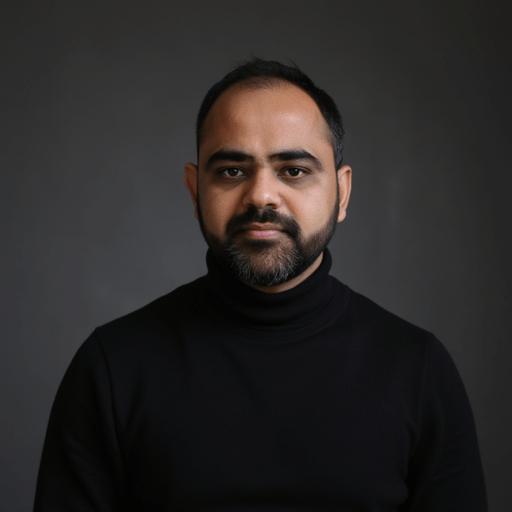

AN Essex of University AI expert has warned workers who ignore artificial intelligence risk being left behind after he was named one of the UK’s leading innovators.
Senior lecturer Dr Haider Raza said workers who fail to adapt to artificial intelligence could lose their jobs as it transforms industries worldwide.
He was named on Universities UK’s Future 50 Innovators list, which recognises researchers developing groundbreaking technology.
The honour recognises his work on SKINTEL, an AI-powered skin cancer tool developed with Check 4 Cancer that identifies suspicious lesions with 99 per cent accuracy.
Speaking about the growth of AI, Dr Raza said: "AI can be a bit of a misunderstanding.
Read more
‘Me and my daughter missed kick-off’ – U’s fans frustrated by security queues
Major plans unveiled for Leisure World in ‘biggest investment for a generation’
Essex divorce solicitor explains why couples are splitting after decades together
"The people who will not adapt to AI will be replaced. The people who adapt to AI will not be replaced.
"We need people who know how to talk to AI, and work with AI."
He said society’s adaptation to artificial intelligence, rather than major breakthroughs, would drive the biggest changes over the next decade.

Dr Raza said: "We know that these big-tech companies are bringing their own AI models.
"They have been trained in such a way that they can match human-level intelligence. We have reached 90 to 95 per cent of their intelligence.
"But the change that we will see in the world in the next 10 to 15 years is how a new AI society can be built around us, where humans and AI can live together, and work in a co-operative manner.
"We are now looking to move where we can live without conflict.
In cities including San Jose and London, driverless cabs are operating and grocery stores require no human intervention."
Dr Raza helped develop SKINTEL, which combines images of suspicious skin lesions with 22 patient characteristics to help clinicians identify cancer faster.
Essex University and Check 4 Cancer developed SKINTEL through a Knowledge Transfer Partnership.
Reflecting on the honour, he said: "It has been a pleasure. It reflects the hard work we do on campus. The university provides strong support and excellent facilities.
"But one limitation is that the data included few patients with darker skin.
"We are collaborating so that we can retrain the model on people with darker skin.
"Nobody has previously combined metadata and images to diagnose skin cancer.
"Previously, researchers focused on images alone."


Share